1. Introduction
The vast karst underground of the Chul-Bair and Hodja-Gur-Gur-Ata mountain ridges at the southeast tip of Uzbekistan, close to Tajikistan and Afghanistan, have been discovered and explored mainly by expeditions of Russian speleologists from ASU (Assoсiation of Ural speleologists), usually organized by Ekaterinburg Speleo Club (SGS), since 1985. In the most famous cave, Boybuloq with entrance at 2647 meters above sea level in the slope of the Chul-Bair ridge, the depth of 1415 meters was reached in 1992. At the time it was the third deepest cave in the world — after Gouffre Jean-Bernard in France with 1602 meters and Huautla / Rincón in Mexico with 1475 meters. The current main contender for the next supercave, deeper than 2000 meters, besides Boybuloq, cave Cheve in Mexico, the pride of American cavers and the United States Deep Caving Team, discovered in 1986, was 1394 meters deep in 1992. As of 2025 the deepest cave in Northern America was Tears of the Turtle Cave (Flathead, Montana), entrance elevation 1310 meters, depth 755 meters and the deepest cave in Russia was Gorlo Barloga (Urupsky District, Karachay-Cherkessia), entrance elevation 2825 meters, depth 839 meters.
Despite many important and interesting discoveries after 2000 on the wall of the Hodja-Gur-Gur-Ata ridge, the hope of a very deep cave did not arise again until 2019 (Boybuloq was 18-th deepest cave in the world) when the ASU expedition managed to find a bypass of a siphon at -735 meters in the Višnevskij cave spreading down from the upper part of Chul-Bair. The cave with entrance at the elevation of 3522 meters was dicovered in 2015 and the meanders which followed the siphon after the bypass became much wider and continued in the direction of Boybuloq. The 2019 expedition stopped because of the lack of time at the depth of 1131 meters, 50 meters vertically and 200 meters horizontally apart from the nearest point in Boybuloq. The connection could produce cave depth of 2033 meters, third deepest in the world, after Krubera-Voronja and Verëvkina caves.
The preceding expedition to Asia 2025, which took place in August 2024, with 11 participants, without standard members of the team. It was the smallest expedition to Chul-Bair since 2017, and could be described as a bridge between the large expeditions in the years 2021, 2022 and 2023, which all had only one aim, the connection of Boybuloq and Višnevskij caves, and the future exploration of the cave network in the Chul-Bair mountain, for which the size and focus of work are still not quite clear. The 2024 expedition worked in two directions — in Boybuloq and on the upper part of Chul-Bair (they did not work in Višnevskij cave) with 4 important achievements:

- Continuity of the Chul-Bair underground exploration was preserved.
- Survey of parts, discovered mainly in 2023, increased Boybuloq length by 1,5 km to 19,9 km.
- Continuation of the cave, leading in the direction of the Chul-Bair ridge wall was discovered.
- Medvežja peščera (Bear cave) was discovered near the top of Chul-Bair, at elevation of 3768 m.
Its entrance is situated 246 meters above the entrance to Višnevskij cave and a perspective of a cave, deeper than 2200 meters, on a par with Krubera-Voronja and Verëvkina caves, was now opened.
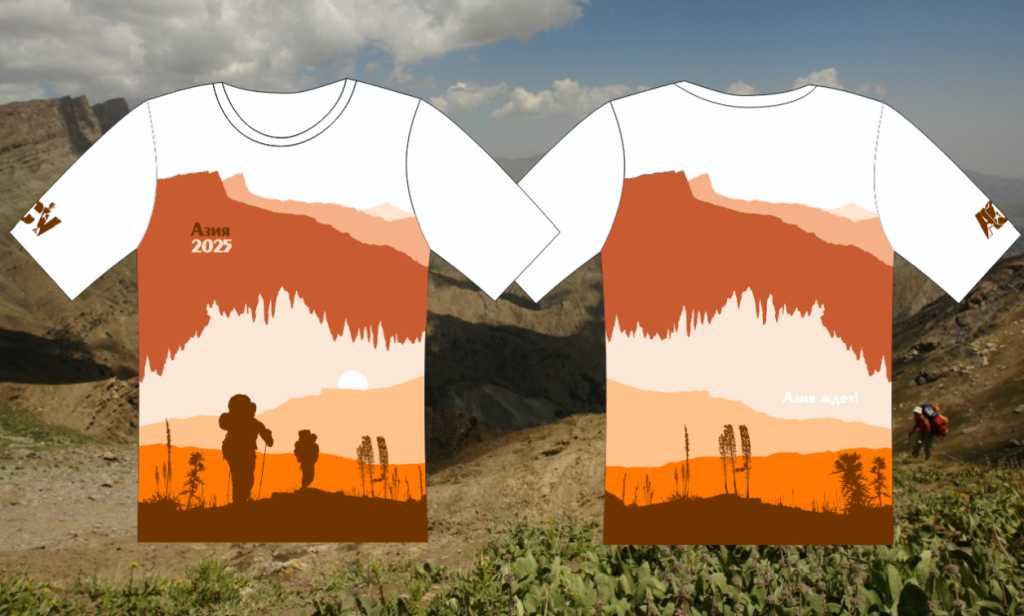
Figure 1: Asia 2025 expedition T-shirt design by Julija Ustinova - front side (Asia 2025) and back side (Asia is waiting).
The expedition started on August 2, when the participants departed by train to Boysun from Tashkent, and ended on August 22, when they returned to Tashkent. It was organized by SGS and ASU with the support of Russian Geographical Society (RGO) and Russian Union of Speleologists (RSS). A powerful caving team from ASU, Moscow and Novosibirsk was gathered, with several guest participants from abroad, to operate in the widest scope ever: two Boybuloq teams, Višnevskij team, Chul-Bair Wall team and team for revision of caves on the Hodja-Gur-Gur-Ata wall. The goals:
- Search for a connection between the caves Višnevskij and Boybuloq from the lower part of Višnevskij. Widening of narrows, determining the shortest route using ground penetrating radar, and finding the water flow path from the lake at the bottom of Višnevskij to Boybuloq.
- Search for a connection between Višnevskij and Boybuloq from the Camp -560 in Boybuloq. Widening the narrows toward Višnevskij, checking the passages at the top of a 170-meter shaft, and determining the shortest route using ground-penetrating radar.
- Further exploration of the narrow passage in the upper part of Boybuloq after the +359 m point, reached in 2023.
- Search for continuation in the ice cave Medvežja peščera in the Chul-Bair Wall, discovered in 2024.
- Recording temperature and humidity in the cave Lunnaja as part of paleoclimate studies conducted by National Taiwan University in collaboration with the Institute of Geology and Mineral Resources of Uzbekistan.
- Further exploration of the cave Isetskaja on the Hodja-Gur-Gur-Ata ridge, checking and topographic survey of the galleries discovered in 2016.
- Search for new passages and modern topographic survey of other caves on the Hodja-Gur-Gur-Ata ridge, discovered and explored in the 1980s: Berloga, Učitelskaja, Podarok, Sifonnaja.
- Reconnaissance of the access route to the Bel-Auty Pass on the Hodja-Gur-Gur-Ata ridge to enable further exploration on the right (north) side of the ridge.
2. People
2025 expedition was one of the largest, with 35 participants:
28 from Russia: Evgenij "Ženja" Curihin, Dar'ja "Daša D." Dijarova, Anna "Anja J." Jakovleva, Anastasija "Nastja K." Kudenko, Vadim Loginov, Ol'ga Pomorceva, Aleksej "Leha S." Semenenko, Georgij "Goša" Sapožnikov, Marija "Maša" Studenikina, Natal'ja "Nataša" Šipicyna, Nadežda "Nadja" Šituhina, Ilona Vladimirova and Aleksej "Leha Z." Zaharov from Ekaterinburg, Vasilij "Vasja" Samsonov from Orenburg, Elena "Lena" Ljubavina from Čeljabinsk, Aleksandr "Saša" Kuznecov from Snežinsk, Aleksej "Ljoša" Serëgin from Miass, Maksim "Maks" Korobov from Perm', Anna "Anja E." Evdokimova from Ufa, Anastasija "Nastja" Janina, Andrej Kol'cov, Anna "Anja K." Kolybina, Dar'ja "Daša" Krasnojarova, Evgenij "Ženja R." Rybka and Evgenij "Ženja S." Sakulin from Moscow, Аnna "Anja G." Gerus, Kirill Lobun'ko and Vladlen "Vlad" Polockij from Novosibirsk;
2 from Uzbekistan: Vladimir Dolgij and Anastasija Kosteckaja from Tashkent;
1 from United States: Jessica "jvo" Van Ord of New York, with experience in deep cave rescue;
2 from Israel: Roman Har-Nof and Arnon Ratzabi;
2 from Turkey: Ümit Günhan and Melikşah Yılmaz;
In the two photos below all the participants are depicted, in the second one two members from Uzbekistan who departed a few days earlier, and in the first one all the others (from left to right, criterion is an imaginary vertical line passing between the eyes of a person).

Figure 2: 33 expedition participants in Dehibolo, August 22, by Ženja: Jessica, Nastja K., Ilona, Ženja S., Maša, Roman, Anja G., Umit, Lena, Daša, Goša, Leha Z., Leha S., Meliksah, Arnon, Saša, Ol'ga, Nataša, Kirill, Ženja (stretched on the rock front middle), Vlad, Nadja, Anja J., Halid Amiraminov, son of Sadyk, Nastja, Sadyk Džuraev, host of the expedition in Dehibolo, Anja E., Vasja, Andrej, Daša, Leha, Anja K., Maks, Vadim, Ženja R. A click on the photo, followed by another one, shows it in original resolution.
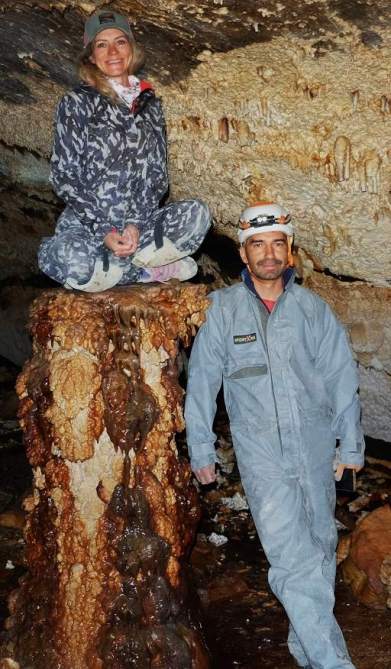
Figure 3: Anastasija Kosteckaja and Vladimir Dolgij, by Evgenij Curihin
Expedition leader was Vadim Loginov. There were 5 teams, operating in different locations - team leaders are given after the location of work:
Hodja-Gur-Gur-Ata — Evgenij Curihin, Višnevskij Cave — Evgenij Rybka, Boybuloq / Camp at -560 m — Evgenij Sakulin, Boybuloq / Camp Zero — Vasilij Samsonov and Chul-Bair Wall — Dar'ja Krasnojarova.
3. Chul-Bair caves
Main focus of the expedition were the two caves, Boybuloq and Višnevskij, and their possible connection, using all available means, good support of the cave teams, and also rechecking the possibilities that might get overlooked in 2021, 2022 and 2023. The latter idea paid off — helped by a play of favorable circumstances and gave tangible result on the last day of the expedition.
A team of six, led by Evgenij Rybka, worked in the lower part of Višnevskij. They made a more precise topographic survey of the passages discovered in 2023. Using a long hose they redirected some of the water from the current underground river (which bypasses Boybuloq and flows into a large active siphon) into the old riverbed, ending with the now static siphon shown in Fig. 17, the point, closest to Boybuloq. The idea was to confirm or rule out the possibility of connecting the two caves in that direction. The hose added 10 cubic meters of water per day to the static siphon and it was expected that the water would show up somewhere in the closest parts of Boybuloq. The result was negative, no additional water has been detected neither in Višnevskij nor in Boybuloq. The team also installed a georadar radio beacon in promising directions. Besides that, work was undertaken to widen the promising but too narrow passages.
Radio communication was established between the two groups working towards each other in both caves, and the surface, securing the efficient coordination.
In the upper part of Boybuloq, a group of four cavers led by Vasilij Samsonov continued exploring the ascending passage, discovered in 2023, which was followed to an elevation of 359 meters above the cave entrance, and in 2023 enlarged Boybuloq's amplitude, the difference between the cave's highest and lowest accessible point, from 1,430 to 1,517 meters. In 2024 the expedition did not reach this top point, while in 2025, the Samsonov team did it, they managed to climb 6 meters higher, to point +365, increasing Boybuloq's depth to 1,523 meters. After that point an already very narrow and difficult passage ended in a squeeze, impassable for man.
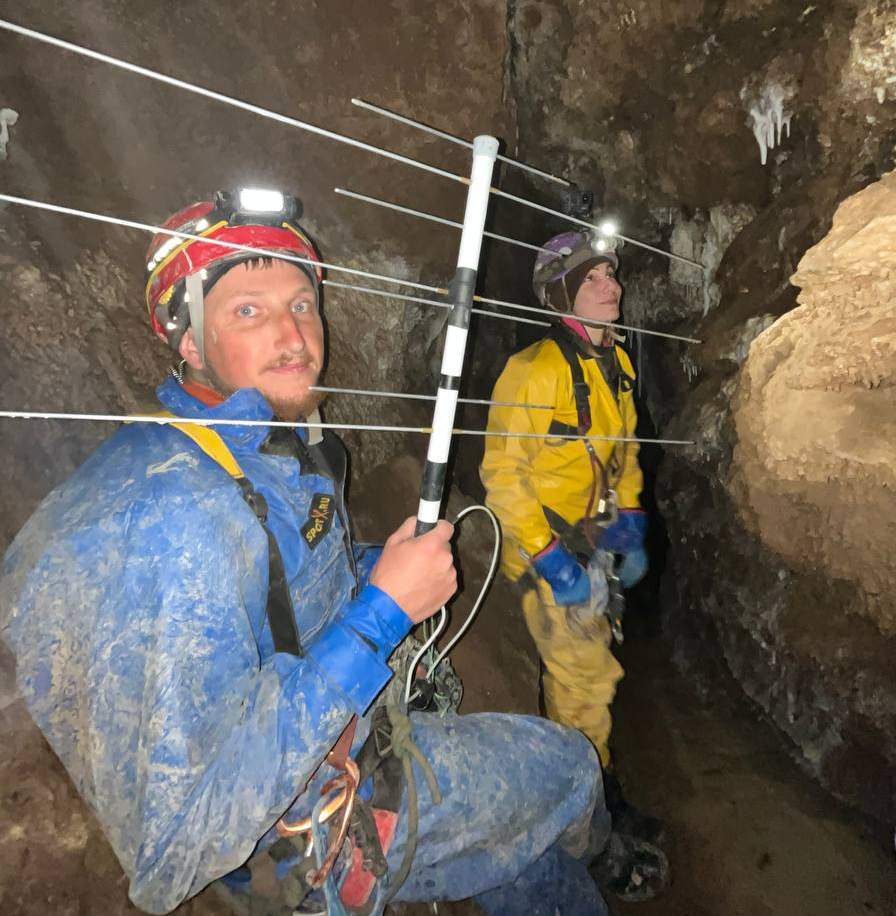
Figure 4: Georadar receiver, with Aleksej Serëgin and Jessica Van Ord, by Daša Dijarova
Also in Boybuloq, substantial effort was invested into widening of the narrows in the direction of Višnevskij by a team of ten, led by Evgenij Sakulin and stationed in Camp -560. Ground-penetrating radar (GPR) recorded signals from the radio beacon in Višnevskij. Unfortunately, it was later discovered that the readings were inaccurate, as the GPR beacon's electronic module was damaged during transport through the cave. As in 2023 in Boybuloq a hydro-power generator was installed, at Camp -560. Batteries were charged not in the base camp on the surface, but in the cave, on-site, significantly increasing the efficiency of the engineering team.
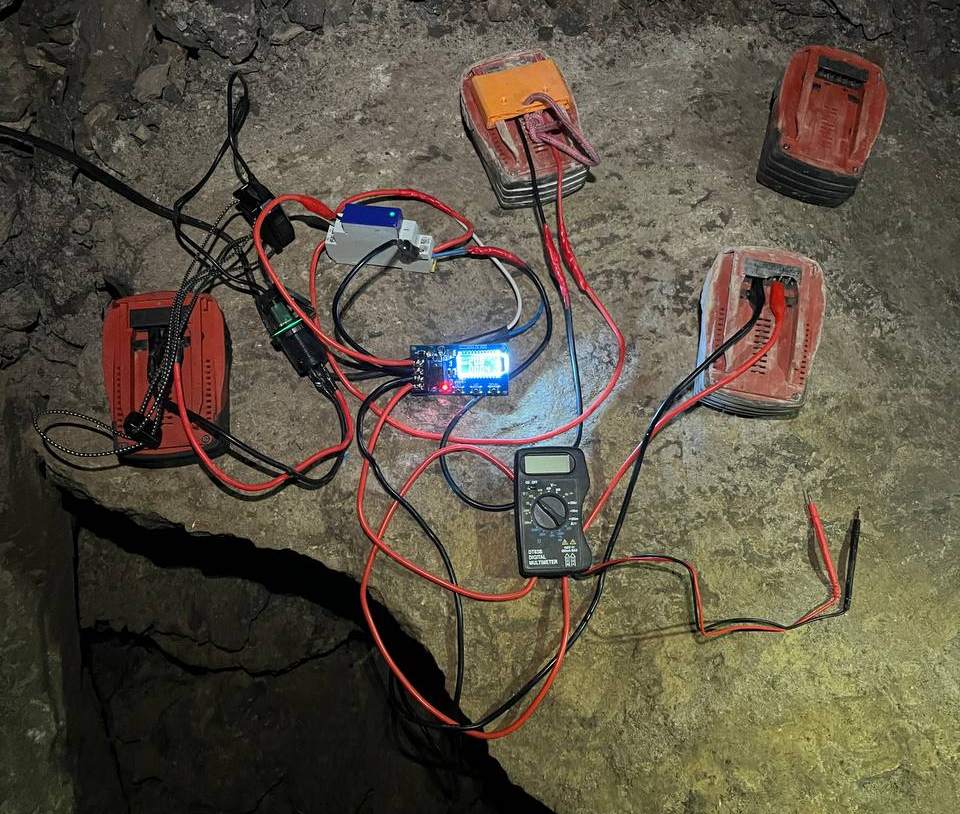
Figure 5: Battery filling station near Camp -560, by Aleksej Serëgin
As a result, 20 more meters were opened in a previously too tight passage that presumably leads toward the old riverbed of Višnevskij. Yet the passage ended in impassable narrows.
The last working day in Boybuloq was August 18, by Sakulin's team, stationed at the Camp -560, starting point for the work towards connection with Višnevskij cave, they worked in cave part about 140 meters higher, 420 meters below the Boybuloq entrance. From Camp -560 there is a one day (8-10 hours) trek to the cave entrance, and on August 19 they packed and sealed the camp for another year, and in the evening at 22 hours they were on the surface. From the camp at the bottom of Višnevskij, starting point for the work to connect the two caves (area around the static siphon depicted in Fig. 17), there is a 3 day trek - so the last working day of the Rybka team was August 16. After lunch they departed and on August 19, in the second half of the day, they reached the surface — from the ridge above the cave entrance, at about 3550 meters above sea level, the descent to the base camp at 2800 meters also takes about 3 hours. On August 20 all the expedition members gathered in the village Dehibolo (elevation 1750 meters). On August 21 in the morning they departed by truck to Boysun and from there by bus to Samarkand to reach Tashkent on August 22.
And as it happened several times before, an unexpected discovery of great importance was made on August 18 in Boybuloq, by the Sakulin's team. After 2021, when the bottom of Višnevskij was reached, several possible places in Boybuloq, closest to Višnevskij were earmarked, all at a distance of about 50 meters, while in Višnevskij it was soon clear, that the static siphon, depicted in Fig. 17, is the nearest point to Boybuloq. In 2023 a large effort was undertaken from both sides to connect the two caves by digging in two places, thought to be most promising, though there was no draft, usually a compulsory precondition for such undertaking. High-intensity mechanical noise, produced by drilling machine in Višnevskij cave was heard in several places in Boybuloq, as already mentioned all at a distance of 50 meters, some 140 meters above Camp -560. One of those places was thoroughly checked in 2022 and 2023, but digging was slow and difficult as the wall was made of flowstone concretions mixed with clay. There was no draft and no sign even of a smallest meander. In 2022 a hole was made in the wall and water flew out, so further digging, in wet flowstone and mud, would be even more difficult. In 2023 the water did not flow any more but still the digging was slow and complicated. Suddenly Aleksej Serëgin noticed draft from one of the drilled holes. Yet the draft soon stopped. The place was earmarked as a "backup digging site". In 2025 the team expected to see the water from the flooded static siphon in Višnevskij flowing out here but it did not show up. Yet, as every other option was tried again in 2025, to no avail, on the last day the team made a 1 meter hole in this backup site. Draft reappeared, after some digging the hole opened into a passable narrow tunnel. After about 35 meters another choke point followed. Soon it was also broken and after 70 meters (the tunnel, directed straight towards Višnevskij, was named 70-meter Tunnel though the distance was not surveyed, just estimated) the third narrow point appeared. The team had barely enough time left to break it. The explorers were in for two surprises: continuation was visible, with a good echo, and they smelled a stench, that was hard to bear (the same stench was barely noticeable in the morning, when the entrance to the 70-meter Tunnel was made passable). Immediately it was clear to them that the team, which departed the bottom of Višnevskij on August 16 burned polyethylene foil to check the aerial connection with Boybuloq. In Boybuloq the cavers all agreed that if someone would still be at the bottom of Višnevskij, they would hear him from the end of the 70-meter tunnel.
The end of this tunnel is 409 meters below the entrance of Boybuloq, 2238 meters above sea level, and the bottom of Višnevskij is 2239 meters above sea level. The nearest point in Višnevskij, of the end of 70-meter tunnel, is the static siphon. In its vicinity, a bit further away, there is a very narrow meander, directed towards Boybuloq. Will the voice be heard there or somewhere else, is a principal question for the August 2026 expedition.

Figure 6: 3D view of the Višnevskij cave and of the upper section of Boybuloq. By Julija Ustinova and Vadim Loginov.
Fig. 6, a click on it brings it in full resolution, shows 3D view of both Boybuloq and Višnevskij caves after the Asia 2025 expedition, with top of the Chul-Bair ridge in the background. Višnevskij cave is spreading down from the top to the right starting on the left side, and Boybuloq is adjacent to it a bit more to the right. The author cropped the view slightly and added two white dots, marking the cave entrances (Višnevskij top left, Boybuloq middle right). The color scale bottom left shows the tunnel outline depths, varying from red (elevation 3560 meters) to yellow, green, blue and violet (elevation below 2400 meters).
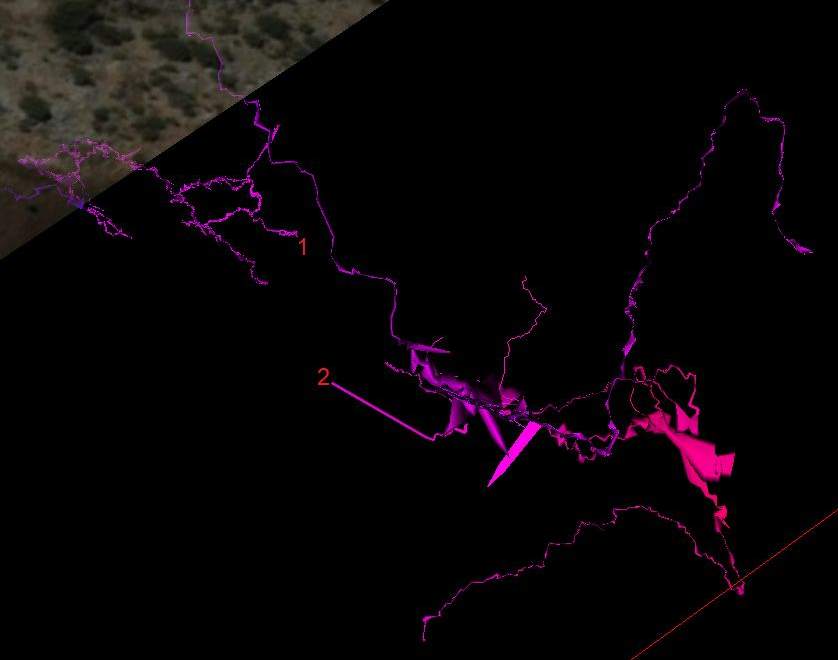
Figure 7: Part of Fig. 6, showing the possible connection of the two caves. By Vadim Loginov.
Fig. 7 shows the detail, lower right part of the Fig. 6, enlarged. The closest points in both
caves are marked with 1 (in Višnevskij cave) and 2 (in Boybuloq). The violet
line just below the point 2 is the 70-meter tunnel, explored on the last working day of
the expedition.
It will be most interesting to see the actual margin of error made during the survey on which the
above figures are based, once the connection between the two caves is established. The survey polygon
length from the Boybuloq entrance to Camp -560 is 3035 meters, while such length from the entrance if
Višnevskij to the static siphon close to its bottom is 6181 meters. An error of
2% would mean 60 meters in Boybuloq and 120 meters in Višnevskij, all within
distances from points 1 and 2 in the Fig. 7.
Figure 8: End of the 70-meter Tunnel at the end of the last working day of the expedition, by Aleksej Serëgin.
Translation of the audio part:
The tunnel ends with such a narrow passage, I already started hammering the ceiling. ... We shall continue here now ... UUU! UUU! UUU! ... Well, there is an echo, ... I believe also a widening.
Dar'ja Krasnojarova and Andrej Kol'cov were exploring the cave Medvežja peščera (Bear Cave) at an altitude of 3768 meters in the wall close to the top of Chul-Bair ridge, discovered in 2024. They managed to widen the narrow passage at its end, and descended into a larger space (grotto) full of snow and ice concretions. They searched for a continuation but none was found in the time available.
Figure 9: Andrej Kol'cov in the narrow passage of Medvežja peščera, by Dar'ja Krasnojarova
In the cave Lunnaja, halfway from Boybuloq to Višnevskij, air temperature and humidity measurements were conducted as part of a paleoclimate research study.
4. Hodja-Gur-Gur-Ata caves
A group of 11 worked in caves of the Hodja-Gur-Gur-Ata ridge, next western outcrop of the
Tian Shan mountain chain, to the southwest of
Chul-Bair. Those caves have wider tunnels, are
more
spectacular than Boybuloq and Višnevskij caves, and were the main focus of ASU expeditions from 2010
till 2016 when serious exploration in Višnevskij cave started and the possibility of Boybuloq becoming
another sub 2000 meters deep supercave attracted all the attention of Ural cavers. A substantial part of
the expedition, led by Evgenij Curihin, its most experienced member, a Hodja-Gur-Gur-Ata veteran and
person with best knowledge of its caves, completed the unfinished survey and exploration of several
caves of the Southern group. Elena Ljubavina took care of the nutrition and health of the expedition,
Georgij Sapožnikov was responsible for the rigging of access routes to caves and of shafts in the caves, A
leksandr Kuznecov helped with the rigging and cave survey, which was undertaken by Ol'ga Pomorceva, Anna
Jakovleva, Anastasija Kudenko, Nadežda Šituhina and Marija Studenikina, supported by Vladimir Dolgij and
Anastasija Kosteckaja.
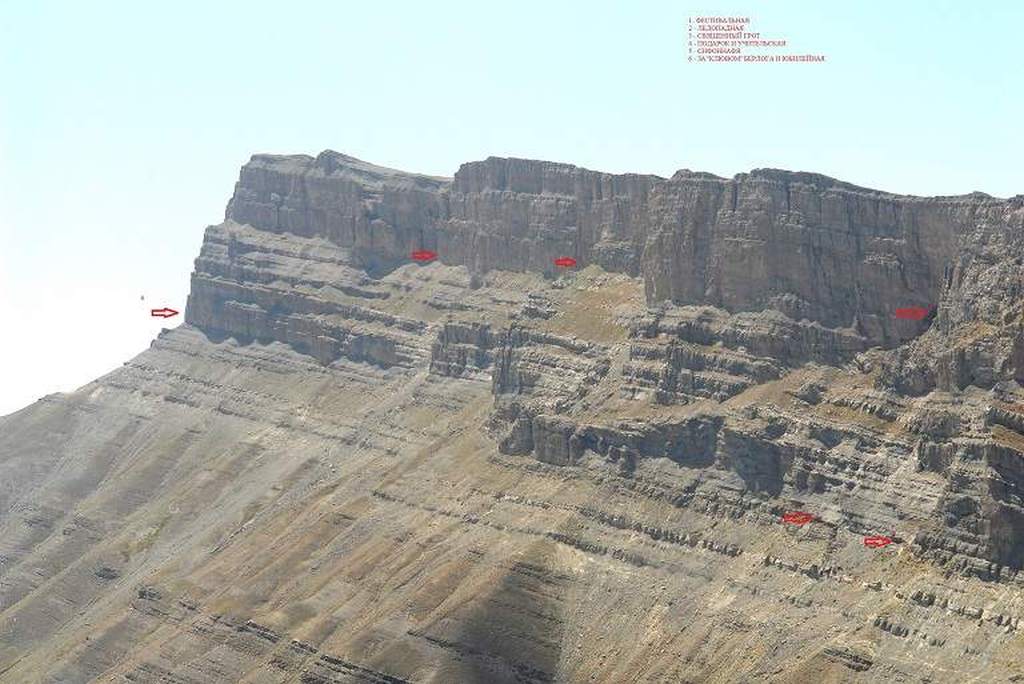
Figure 10: Hodja-Gur-Gur_Ata ridge wall, from the landmark Katataš corner tower (left) to the north, with marked entrances of the Southern cave group, visited during the expedition, by Evgenij Curihin.
The first task was the exploration and survey of a new tunnel in the cave Isetskaja, discovered in 2016. The tunnel ended with a meander, too narrow to pass. Survey and exploration continued in other caves and ended with a remarkable achievement - all in all 5057 meters of cave tunnels were surveyed. Results are shown in the table below:
| Cave | Previous survey | Surveyed in 2025 | New length |
| Tonnel'naja | 490 m | 629 m | 629 m |
| Sifonnaja | 200 m | 250 m | 250 m |
| Učitel'skaja | 2000 m | 2400 m | 2400 m |
| Podarok | 400 m | 700 m | 700 m |
| Berloga | 1600 m | 717 m | 1750 m |
| Isetskaja | 1590 m | 361 m | 1800 m |
Table 1: Southern group of Hodja-Gur-Gur-Ata caves, exploration and survey in 2025.
5. Photo gallery
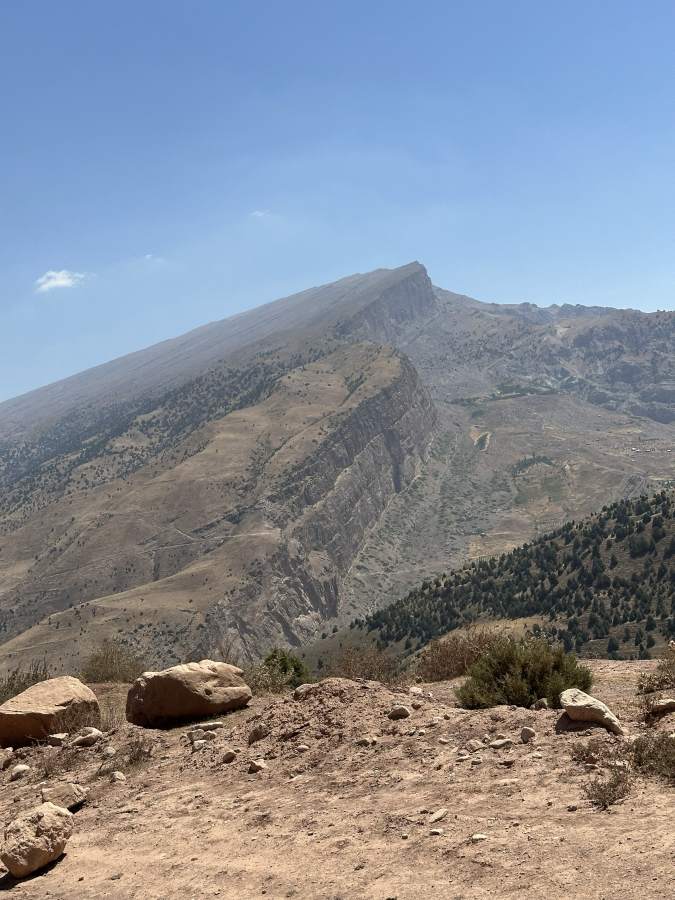
Figure 11: The Chul-Bair ridge has a moderate slope on the southwestern side (left), followed by a 200-meters high wall and another slope on the northeastern side. There are magnificent sights from the top of the wall, in all directions and this one shows the view across the last saddle towards the top. By Vladlen Polockij.
Boybuloq and Višnevskij caves
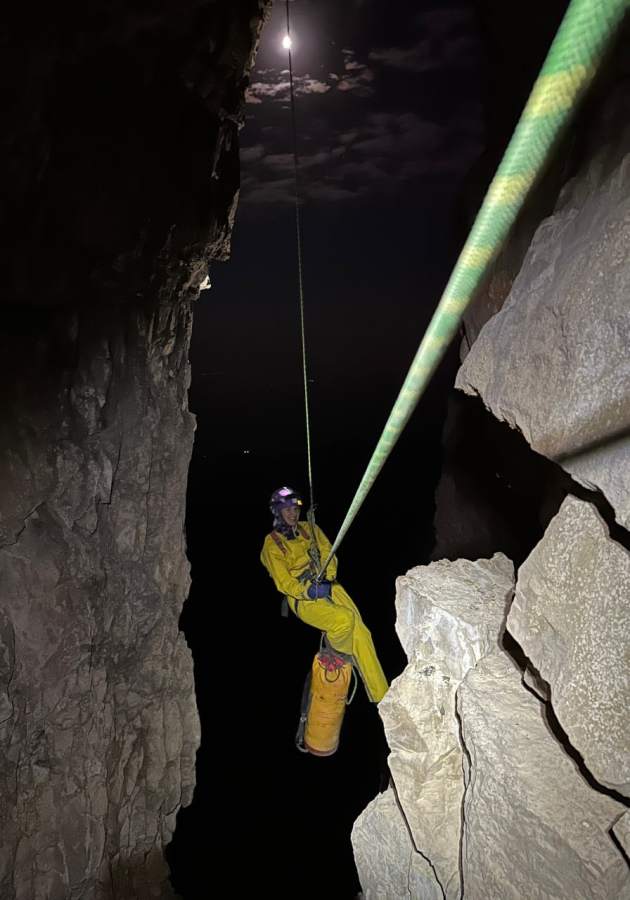
Figure 12: Anna Evdokimova on the rope at the entrance to Višnevskij, by Anastasija Janina
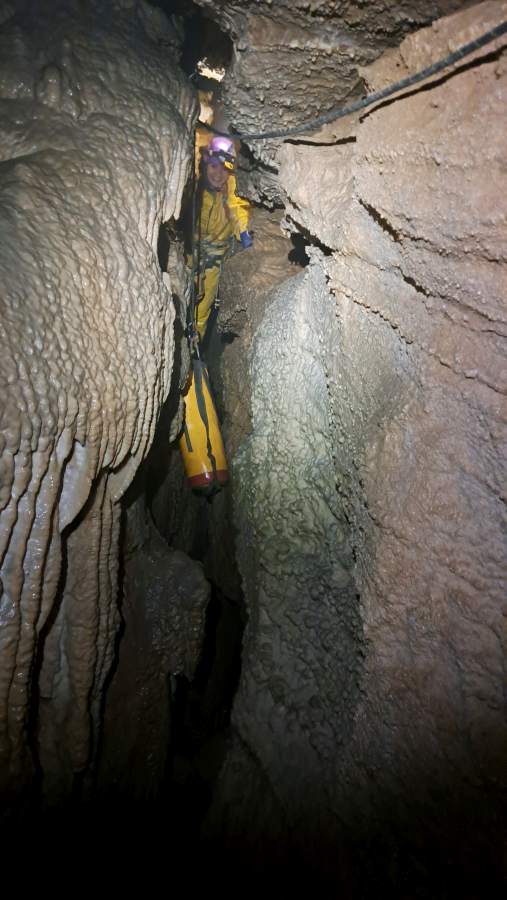
Figure 13: Most of the cave tunnels are narrow meanders, wider in places, and here such a meander opened enough to require a rigged traverse. Photo by Anastasija Janina, with Anna Evdokimova, in Višnevskij.
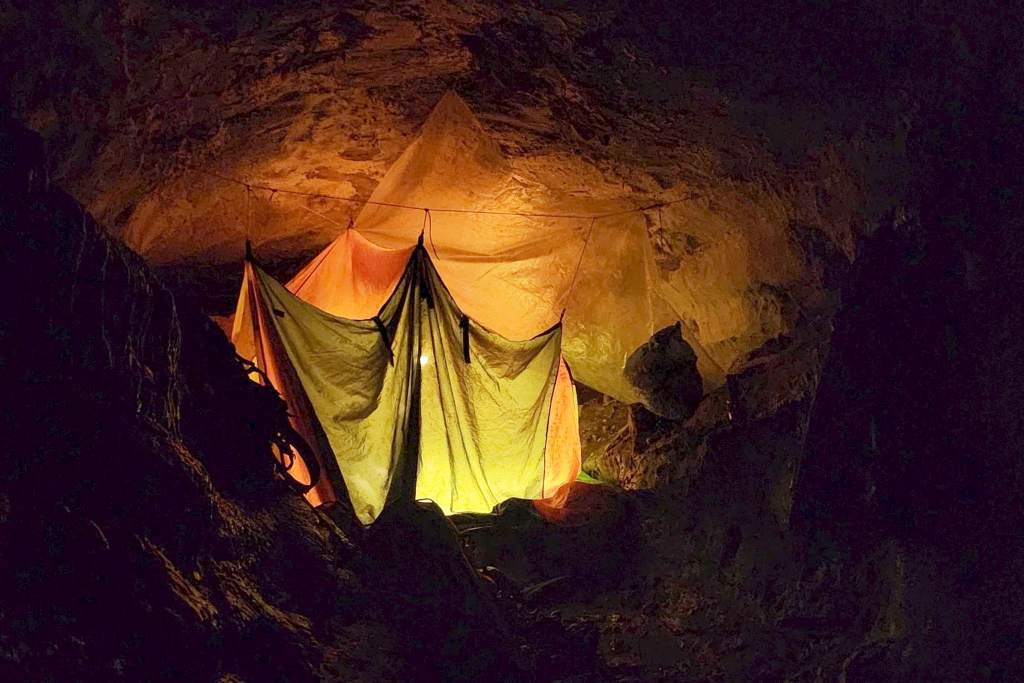
Figure 14: Lager Sifonnyj (Siphon Camp) at -600 meters in Višnevskij, by Vladlen Polockij. It is one of the two places where it is possible to sleep on the 3-day trek from the bottom of the cave to the surface. The bypass of this siphon, discovered in 2019, opened the way to the bottom of the cave.
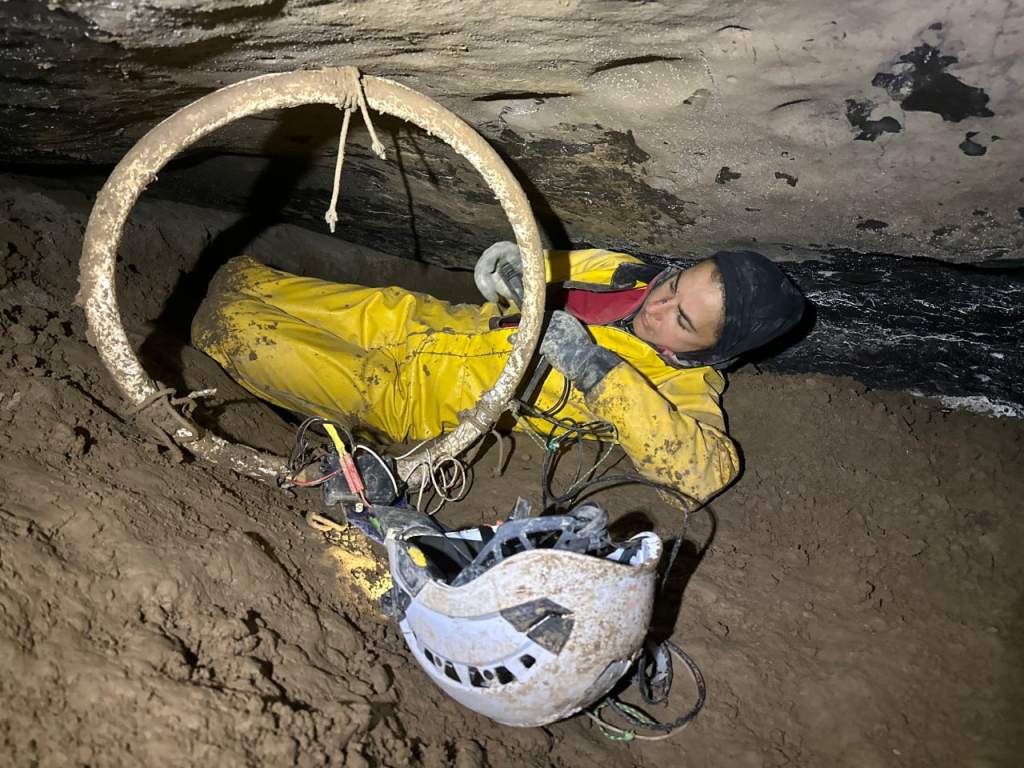
Figure 15: Anastasija Janina at the bottom of Višnevskij with georadar radio beacon unit, by Maksim Korobov
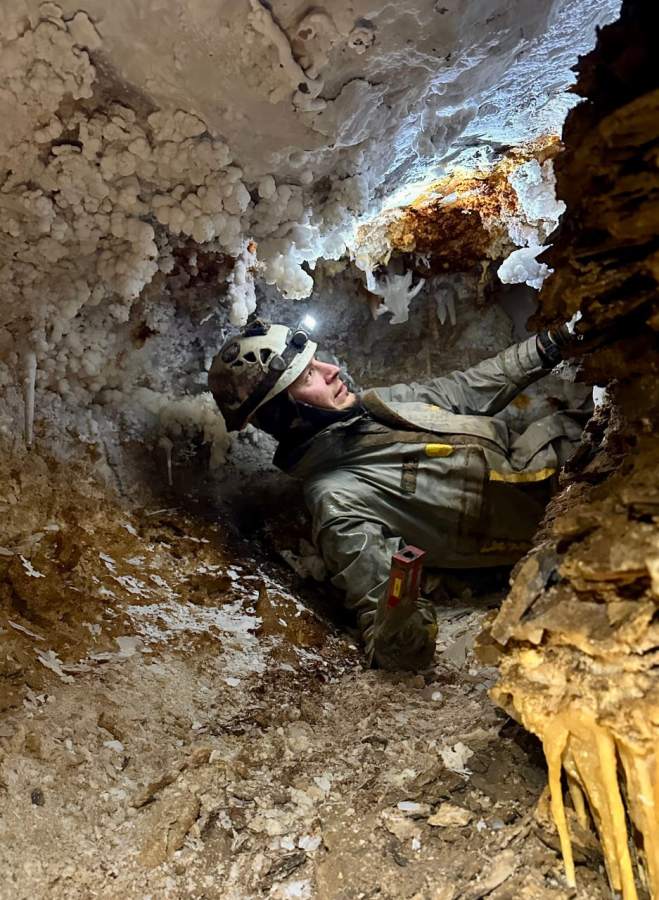
Figure 16: Maksim Korobov in a helictite covered passage during the survey near the bottom of Višnevskij, by Anastasija Janina.
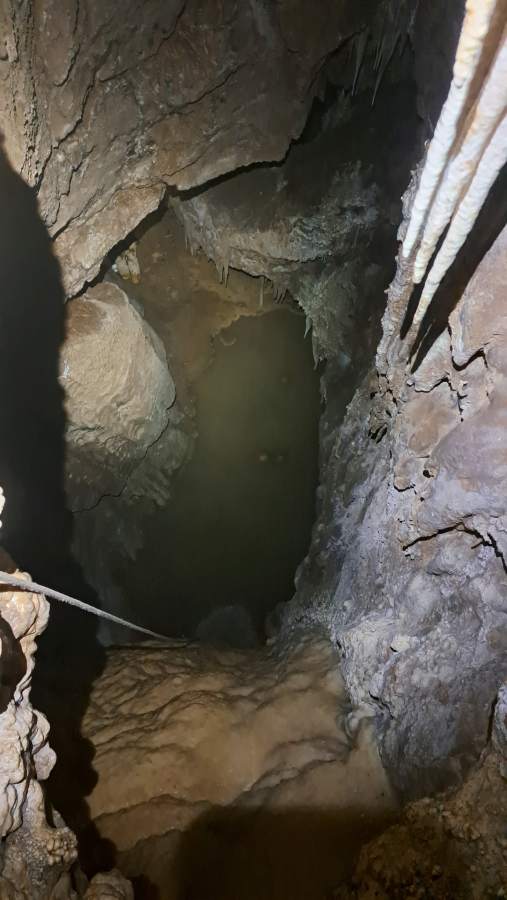
Figure 17: Top view to the static siphon at the location in Višnevskij, closest to Boybuloq; by Maksim Korobov
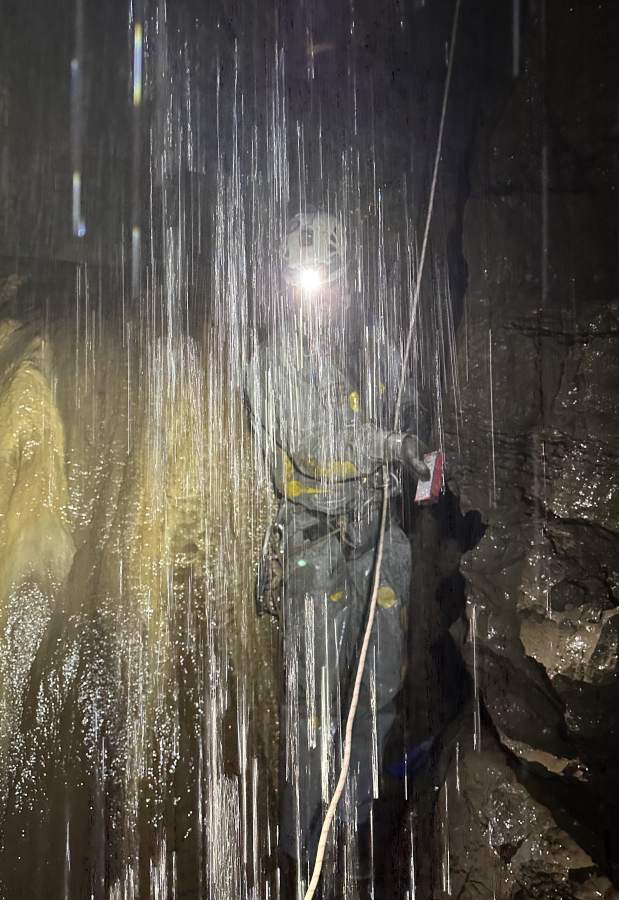
Figure 18: Impermeable caving suits are a must in Boybuloq and Višnevskij. Though the rainfall is scarce in the area, in the cave there are places with showers like the one depicted here. Photo by Anastasia Janina.
Base camp
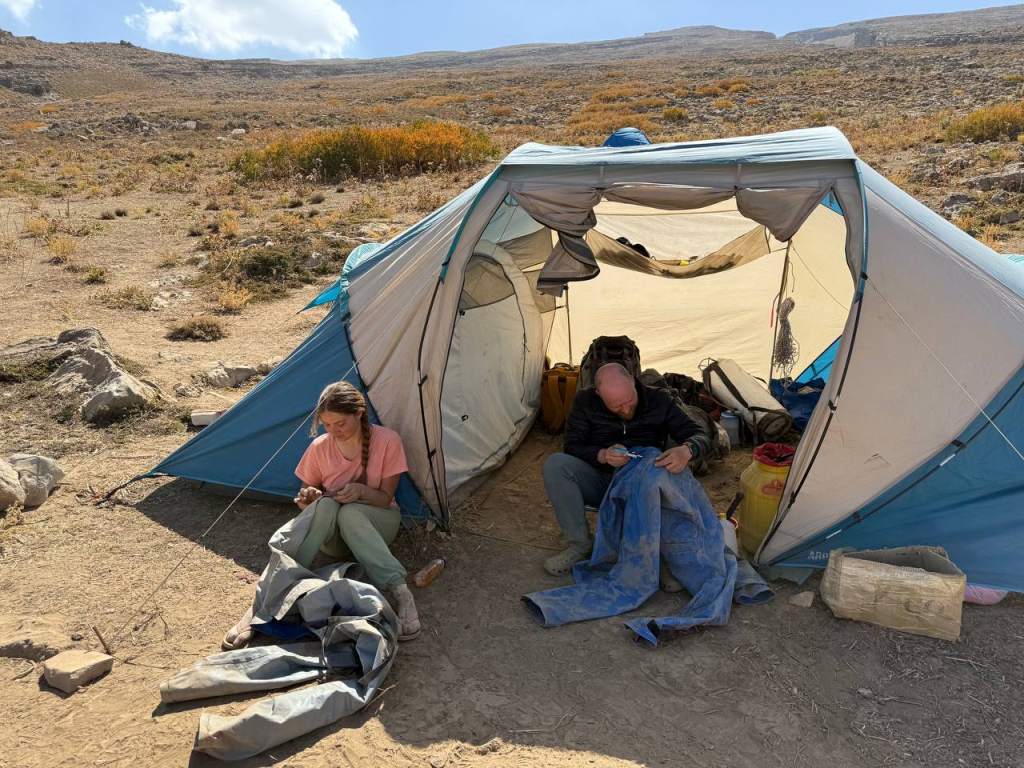
Figure 19: Both Boybuloq and Višnevskij require moving through wet and sharp meanders, which tear apart the most tough fabric. In the photo: Mending the caving suits, by Vadim Loginov, with Ilona Vladimirova and Aleksej Semenenko.
Hodja-Gur-Gur-Ata caves
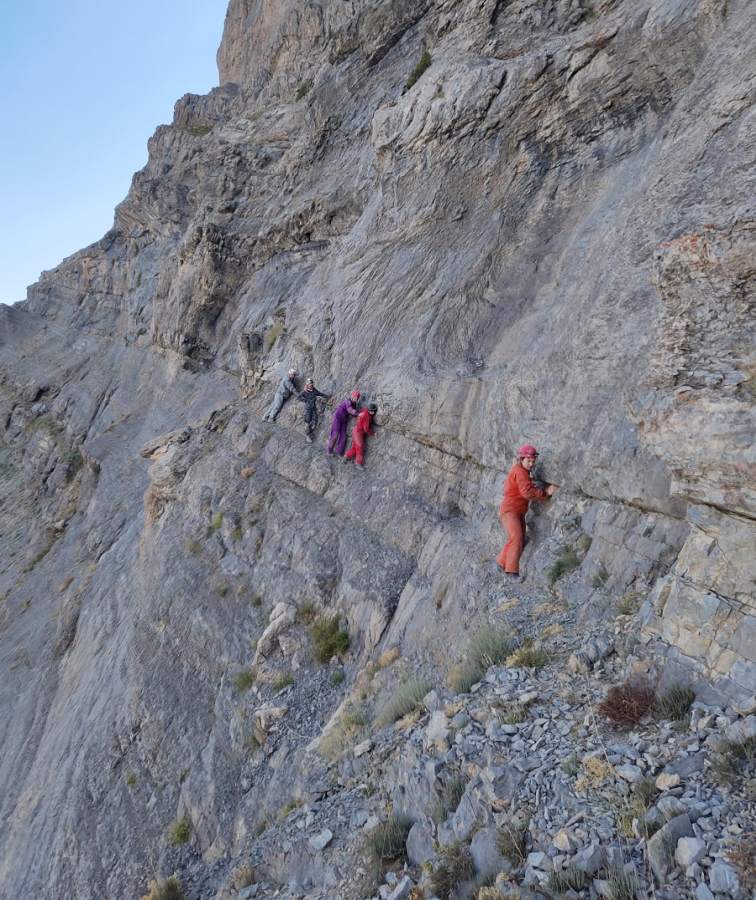
Figure 20: Most cave entrances are located on the wall below the ridge, requiring calm, patience and
composure on long traverses to get there, by Evgenij Curihin
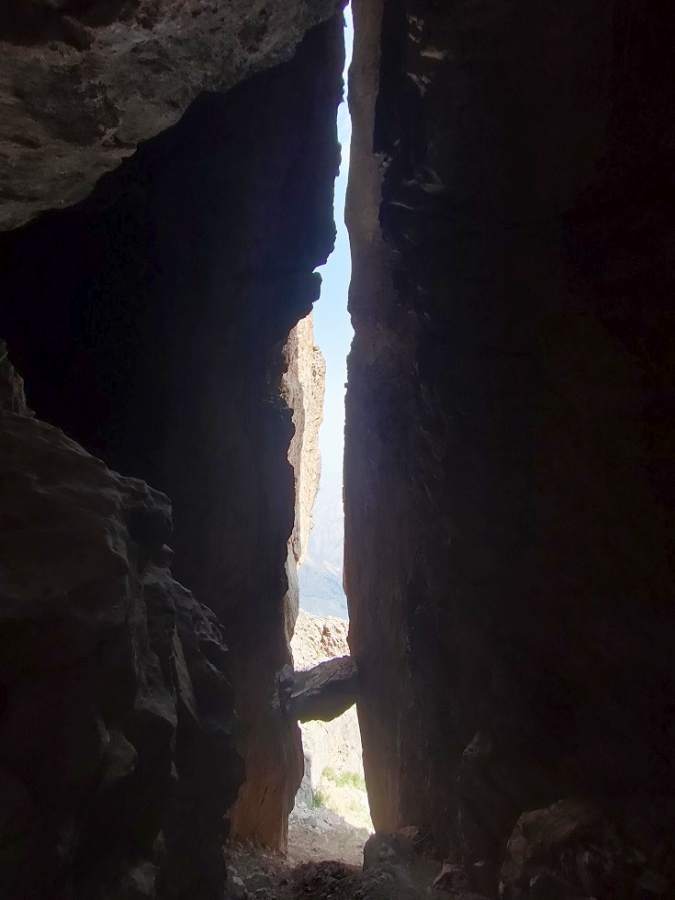
Figure 21: View out from the Isetskaja cave entrance, by Evgenij Curihin
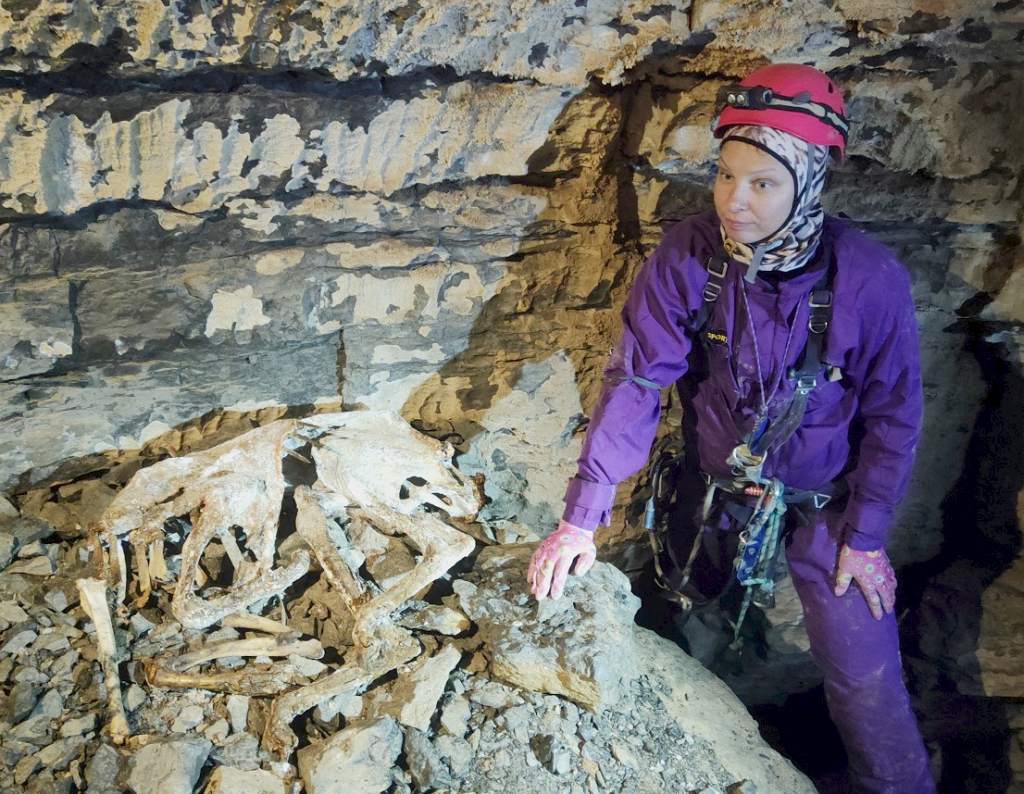
Figure 22: Mumified remains of goats (in the photo) and bears are to be found in Berloga cave, by Evgenij Curihin, with Nadežda Šituhina.
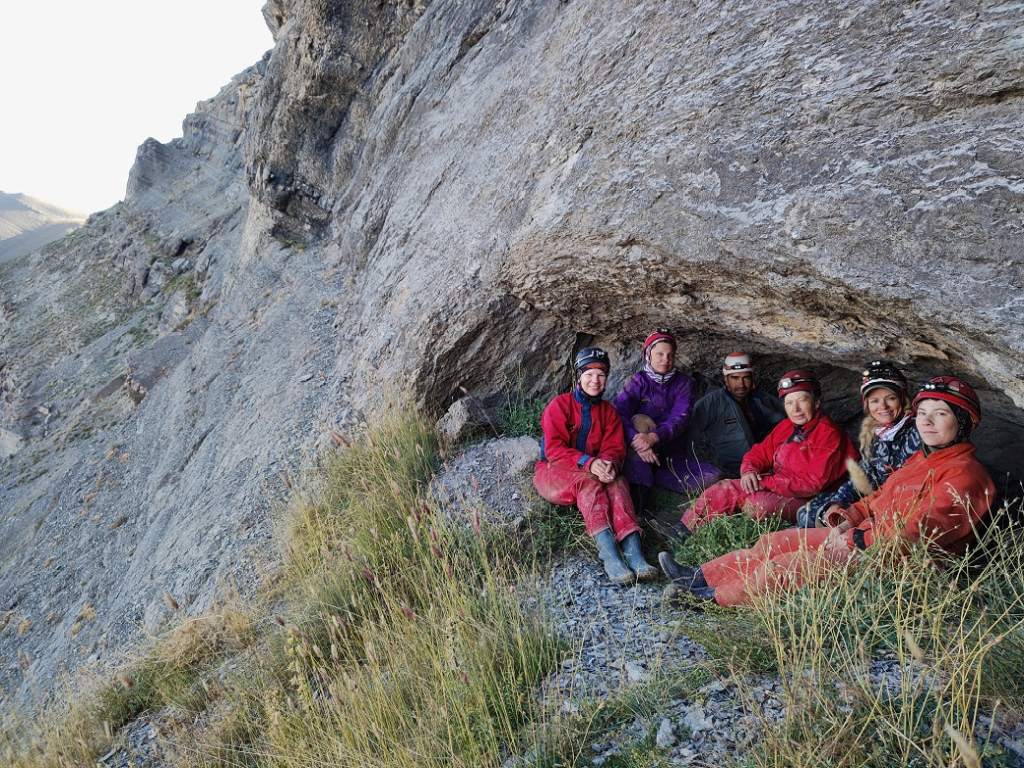
Figure 23: Resting at the entrance to the cave Učitel'skaja on the wall, by Evgenij Curihin
Expedition return
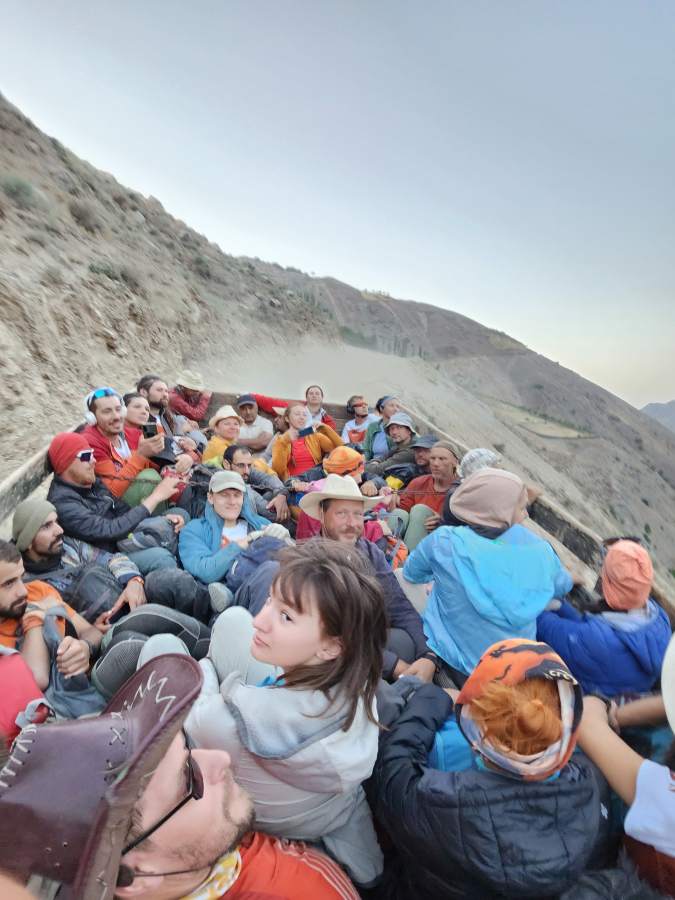
Figure 24: Expedition participants in the body of an all-terrain truck, on the road which winds down from Dehibolo to the riverbed in the bottom of the valley; by Vladlen Polockij.
5. Conclusion
What will bring the summer of 2026? Generally speaking, the time of peace and prosperity which most of the world enjoyed in the past century after the horrors and devastation of WWII, and which lasted through the first two decades of the new millenium, is now being followed by dark clouds and challenges unseen by humanity, which are closing in ever faster. Yet the speleological spring and summer of 2026 looks different, bright, vibrant and promising, especially from the perspective covered in this paper. In both areas, concerning the two caves, in the spring of 2026 still at the 11th and 12th place in the List of deepest caves, Cheve (1538 m) and Boybuloq (1523 m), a very substantial effort is foreseen to increase the depth of both caves.
The 2026 expedition to Cheve started on February 1, will last till end of April (the end of the dry season), and according to Bill Stone, the leader, will exploit the main achievement of the 2024 expedition, connection of a new, as yet unnamed cave just above the terminal siphon, to Cheve. It shortened the access route to the siphon from 6 days to 6 hours. A team of 4 experienced divers, with a supporting crew of 45, will stay in the cave as long as it takes, a month or longer, to dive to the other side of the siphon. The equipment and supplies will allow the divers to proceed underwater 1 kilometer far and, alas, 30 meters deep. The ultimate goal is, however, to reach the resurgence in Cueva de la Mano, 1192 meters below the terminal siphon in Cheve (but 13 kilometers away) and to increase cave depth to 2730 meters.
The main caving expedition Asia 2026, to Uzbekistan, again in the framework of the Assoсiation of Ural speleologists, will take place from August 1 to August 22. If the high-mountain road to the ridge of Khodja-Gur-Gur-Ata from the southwest, across the gentle slope, will be snow-free at the end of May, the main expedition will be preceded in July by a team, led by Georgij Sapožnikov. They will operate on the Hodja-Gur-Gur-Ata ridge, in the caves Berloga, Učitel'skaja and Festival'naja.
The predictions, or rather the prospects for the main expedition, to Boybuloq, which will be led by Vadim Loginov, are simple and, given the circumstances ... disarmingly modest. In his as yet unpublished Report on the speleological expedition Boysun 2025 (in Russian) there are two goals of the 2026 expedition to Boybuloq and caves in the vicinity. First and foremost task is to advance in the 70-meter Tunnel close to Camp -560 in Boybuloq towards Višnevskij cave, and to proceed, at the same time, from Višnevskij cave through a corresponding narrow meander with similar morphology towards Boybuloq ... and to establish sound communication, to hear each other's voices from one cave to another. audio contact, Although the upper part of Boybuloq in 2025 once again ended in impassable narrows, there are still unexplored galleries that need to be checked and could lead to the Chul-Bair wall on the other side of the ridge. So the second objective is to try to increase Boybuloq's depth in this manner.
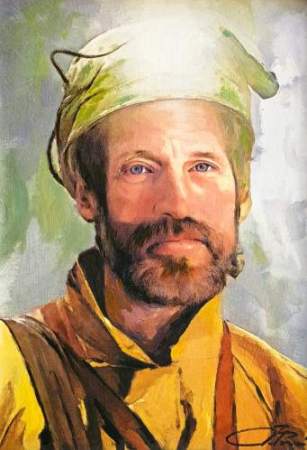 Figure 25: Bill Stone, by Vladimir Posipaj |
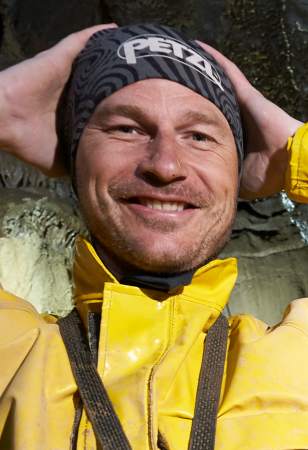 Figure 26: Vadim Loginov, by Larisa Pozdnjakova |
.jpg)
Bill Stone has a long mileage in Cheve, since 1986, Vadim Loginov a shorter one in Boybuloq, since 2007. But Vadim is a successor of a teacher and friend Aleksandr Sergeevič Višnevskij, the man whose team managed to elevate, since 1985, Boybuloq to the third deepest cave in the world (1415 meters, in 1992). As of spring 2026 there are 8 caves, deep between 1500 and 1600 meters, from Torca del Cerro del Cuevón in Spain, 1589 meters deep to Čehi 2 in Slovenia with a depth of 1505 meters. Let the spring and summer of 2026 bring a change in this section, joy to both Bill and Vadim, and hence to all the deep cave lovers.
Related posts:
- This page in Russian ...
- ... and in Slovenian language
- Expedition Boybuloq 2024
- Expeditions Chul-Bair 2022 and 2023
- Expedition Chul-Bair 2021
— the expedition leader. For greater accuracy the cyrillic names in this report were romanized according to the Scientific transliteration of Cyrillic with the pronunciation of the main additional characters as: č = ch, š = sh, ž = zh, y = hard i, j = y, ë = yo, u = oo - i. e. Dmitrij Čeredničenko = Dmitriy Cherednichenko.
This page and its text copyright (c)
Primož Jakopin, member of the Ljubljana
Cave Exploration Society (DZRJL), except when noted otherwise. The photos are
copyright (c) by their authors and are published here with their permission.
Text was reviewed by Vadim and Anna Loginov.
Send inquiries and comments to primoz jakopin guest arnes si (insert dots and at sign as
appropriate). The page was written in September, November and December 2025, February 2026; date of the last
change: March 29, 2026.
URL: https://www.jakopin.net/primoz/slike/Asia-2025_en.php
510